Modular AR Dev Kits: Rapid Prototyping & Sensor Integration – Building the Future of Immersive Experiences
The dream of augmented reality, where digital information seamlessly blends with our physical world, is rapidly moving from science fiction to tangible reality. At the heart of this transformation lies the crucial role of robust development tools, particularly the
ar glasses developer kit. These sophisticated kits are not just collections of hardware; they are comprehensive ecosystems designed to accelerate innovation, enabling developers to build, test, and refine groundbreaking AR applications with unprecedented speed and flexibility. The true power lies in their modularity, facilitating rapid prototyping and seamless sensor integration, which are critical for delivering truly immersive and interactive extended reality (XR) experiences.
Developing for AR glasses presents a unique set of challenges compared to traditional software. Developers must contend with compact form factors, stringent power consumption requirements, real-time rendering, and the delicate balance of user comfort and performance. A dedicated
ar glasses developer kit addresses these complexities head-on, providing a streamlined pathway from concept to a deployable solution.
The Essential Role of an AR Glasses Developer Kit in Innovation
For developers eager to dive into the world of augmented reality, a specialized
ar glasses developer kit is an indispensable tool. Unlike general-purpose development environments, these kits are specifically tailored to the nuances of head-mounted displays, abstracting away much of the underlying hardware complexity. Consider a solution like the Maverick Developer SDK, which provides everything necessary to develop applications that can display within Maverick AR glasses. Such SDKs are designed to integrate smoothly into existing app development workflows, offering robust APIs for content rendering, control, and interaction.
The brilliance of these kits often lies in their deeply integrated software and hardware components. An embedded operating system within the glasses processes commands, efficiently controls the underlying hardware, and manages how information is displayed to the user. This level of integration ensures optimal performance, crucial for the fluid, low-latency experiences AR demands. Without a dedicated kit, developers would face the daunting task of building hardware interfaces from scratch, deciphering proprietary communication protocols, and optimizing for unique display characteristics – a process that would be prohibitively slow and expensive. While some advanced AR glasses, like Meta's Orion AI Glasses, remain internal research projects without public developer access, the existence of comprehensive public-facing kits underscores a commitment to fostering a broader developer ecosystem, empowering creators to bring their visions to life for a wider audience. This accessibility is what truly drives the democratization and advancement of AR technology.
Unlocking Agility: Rapid Prototyping with Modular Hardware
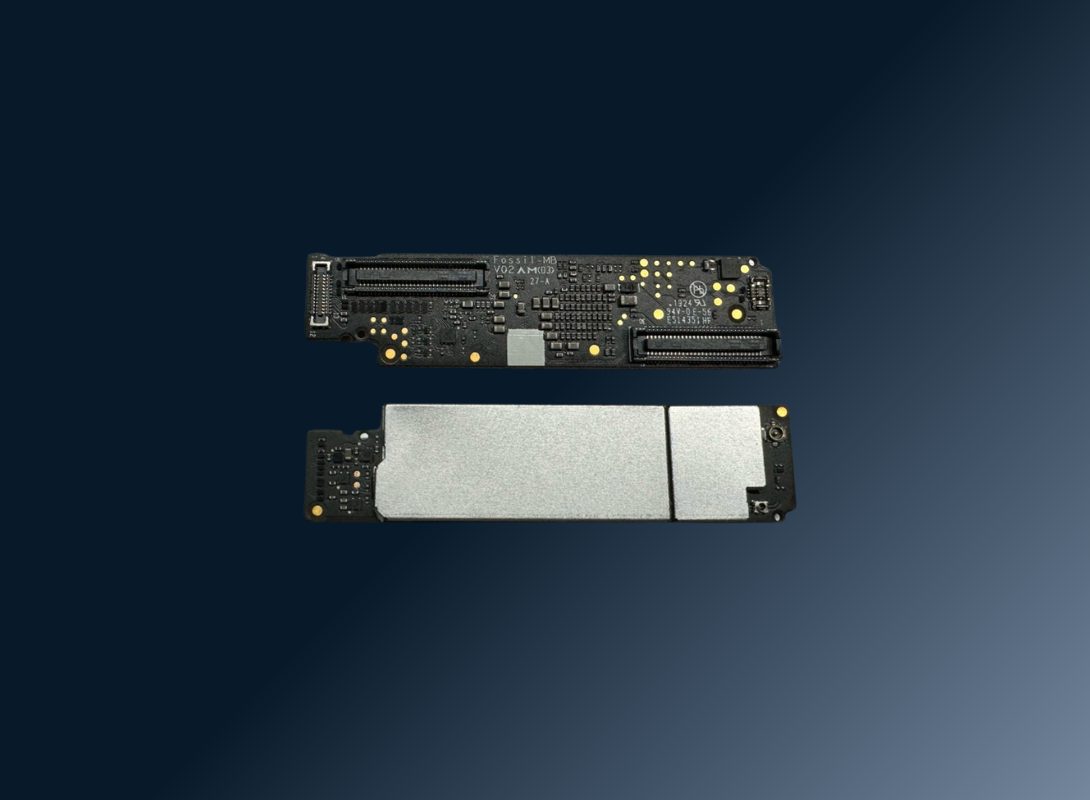
The pace of innovation in augmented reality is breathtaking, making rapid prototyping not just a benefit, but a necessity. Developers need to iterate quickly, test concepts in real-world scenarios, and adapt to evolving user feedback. This is where the concept of modular AR hardware, exemplified by solutions like Atlantik Elektronik's support for the Thundercomm TurboX 5100 AR Glasses Development Kit and their ready-to-use prototype boards, truly shines. These ultra-compact, single-board computers provide a flexible, complete toolkit for advanced and custom AR glasses development.
The core advantage of modularity is the ability to easily swap components, experiment with different configurations, and scale solutions without requiring a complete redesign. This "plug-and-play" approach significantly accelerates the design, testing, and refinement phases, fostering an environment where developers can "fail fast and learn faster." Imagine developing an AR application where you initially need basic gesture recognition but later decide to integrate advanced eye-tracking. With a modular kit, this upgrade can be a straightforward component swap rather than a complete overhaul. The compact form factor, often around 1cm in width for the main board, is also critical for AR glasses, where size and weight directly impact user comfort and aesthetic appeal. This thoughtful design ensures that prototypes are not just functional but also provide a realistic preview of the final product's form and feel. To delve deeper into how these agile development practices can revolutionize your AR projects, explore our related article on
Accelerate AR Product Development with Advanced Dev Kits.
Powering Performance: The Thundercomm TurboX 5100 Advantage
At the heart of many high-performance AR solutions is robust processing power, efficiently managed within the confines of a wearable device. The Thundercomm TurboX 5100 AR Glasses Development Kit is a prime example of a platform engineered to deliver exactly this. Designed with Thundercomm’s expertise, this kit focuses on critical performance metrics that are paramount for AR glasses: optimized power consumption, minimized memory usage, and fast boot times.
Optimized power consumption translates directly to longer battery life, a non-negotiable feature for any wearable device meant for extended use. Minimized memory usage ensures that even complex AR applications can run smoothly without bogging down the system, while fast boot times provide a seamless user experience, eliminating frustrating delays. These aren't just technical specifications; they are fundamental enablers of true immersion. A user pulled out of an AR experience by a dead battery, lag, or slow startup will quickly disengage. The TurboX 5100 achieves this through a highly integrated, compact, and lightweight platform design, making it an ideal choice for developers aiming to create high-performance yet user-friendly AR solutions. For a comprehensive look at the capabilities of this particular development kit, be sure to read
Thundercomm TurboX 5100: The Ultimate AR Dev Kit Toolkit.
Seamless Sensor Integration: Enhancing AR Experiences
The true magic of augmented reality often lies in its ability to understand and react to the user's environment and actions. This capability is powered by advanced sensor integration, and modular
ar glasses developer kits are specifically designed to facilitate this. Prototype boards, for instance, are engineered to allow simple integration of a wide array of sophisticated sensors, significantly enriching the AR experience.
Consider the impact of advanced gesture recognition: instead of relying on external controllers, users can interact with digital objects through natural hand movements, making the experience more intuitive and immersive. Eye-tracking sensors can revolutionize user interfaces, allowing for gaze-based selection and interaction, or even optimizing rendering by focusing processing power on what the user is directly looking at. Depth sensors enable sophisticated environmental understanding, mapping the physical space (SLAM – Simultaneous Localization and Mapping) to accurately place virtual objects and allow for occlusion. Biometric sensors could monitor user health or stress levels, adapting AR content to enhance well-being or productivity.
Furthermore, modular kits support low-latency communication modules, ensuring real-time data streaming critical for multi-user AR experiences or applications requiring immediate feedback from cloud processing. Enhanced computing capabilities embedded in these boards allow for complex visual processing directly on the device, reducing reliance on external hardware and improving responsiveness. By simplifying the integration of these technologies, modular kits empower developers to create AR solutions with richer interactions, more contextual awareness, and truly groundbreaking functionalities across diverse applications, from industrial training and medical procedures to interactive retail and entertainment.
Beyond the Kit: The Value of an End-to-End Partnership
While the hardware and software components of an
ar glasses developer kit are undeniably crucial, the broader ecosystem and support available to developers can be equally transformative. Companies like Atlantik Elektronik go beyond merely providing development kits; they offer comprehensive support as experienced partners throughout the entire value chain. This means not only access to cutting-edge tools like the Thundercomm TurboX 5100 Development Kit and versatile prototype boards but also expertise and guidance that can be invaluable from initial concept to final production.
Such partnerships ensure that developers are equipped with a full spectrum of development tools, facilitating everything from initial design and rapid prototyping to optimizing for mass production. This holistic approach can significantly accelerate development cycles and reduce time-to-market for new AR products. When evaluating an
ar glasses developer kit, it's wise to consider the level of ongoing support, documentation, community, and potential for collaboration that comes with it. A strong partner can help navigate technical challenges, provide insights into best practices, and even assist with supply chain logistics, allowing developers to focus their energy on innovation and creating compelling immersive and interactive extended reality experiences. This end-to-end support transforms a collection of tools into a powerful catalyst for next-generation AR solutions.
In conclusion, modular
ar glasses developer kits represent the critical bridge between ambitious AR concepts and practical, high-performance applications. By providing an integrated environment for rapid prototyping, streamlined sensor integration, and optimized performance, these kits empower developers to overcome the inherent challenges of wearable technology. The flexibility offered by modular hardware, combined with the power of specialized SDKs and the support of experienced partners, accelerates innovation and significantly reduces time-to-market. As the AR landscape continues to evolve, these developer kits will remain indispensable tools, driving the creation of increasingly immersive, interactive, and impactful augmented reality experiences that promise to redefine how we work, play, and connect with the world around us.